Cart
0

Choosing the right dog treat requires an understanding of label terminology.
The pet food industry uses specific language to describe ingredients and processes.
Many owners assume "real meat" implies a specific standard of quality.
Labels can be misleading without a technical breakdown of what the terms actually mean.
A high-quality treat supports digestion and overall health.
Poorly sourced ingredients can lead to sensitivity and long-term health issues.
This guide provides five essential factors to consider before your next purchase.
1. 'Meat Meal' vs Real Cuts
The distinction between meat meal and real cuts is a matter of processing and transparency.
Meat meal is the result of a process called rendering.
Rendering involves cooking animal tissues at high temperatures to remove moisture and fat.
The result is a concentrated, dry protein powder.
This powder often contains a mix of tissues that are not clearly defined on the label.
Real cuts refer to muscle meat and organ meat that have not been rendered.
These cuts maintain their original structure and nutritional profile.
Real meat provides essential amino acids in their most bioavailable form.
Using real cuts allows for a clear origin of the protein.
You should look for labels that name the specific animal and the specific cut used.
Avoid products that list generic "meat" or "poultry" meal.
Transparency in sourcing is the first indicator of a premium product.

2. The Ingredient List Length
A shorter ingredient list often indicates a higher quality product.
Complex lists frequently contain fillers used to reduce production costs.
Single-protein recipes are the gold standard for dogs with sensitive stomachs.
A single-protein treat uses only one animal source for its meat content.
This simplifies the digestive process for the dog.
It also allows owners to easily identify and avoid specific allergens.
Many factory-made treats combine multiple proteins, which increases the risk of a reaction.
When you see a long list of ingredients, examine the first three items.
In a premium treat, the first ingredient should always be a named meat.
If the list includes terms you do not recognize, they are likely chemical additives.
Natural treats rely on the quality of the meat rather than a cocktail of supplements.
You can learn more about why single-protein dog treats matter to better understand these benefits.
Minimalism in ingredients reflects a focus on natural nutrition.
Our Discovery Pack provides an example of clear, concise ingredient profiles across different proteins.
3. The Processing Method
The way a treat is cooked determines how much nutrition remains in the final product.
Most commercial treats are baked at high temperatures.
High heat can destroy sensitive vitamins, minerals, and natural enzymes.
This process often requires the addition of synthetic nutrients to compensate for the loss.
Air-drying is a superior alternative to high-heat baking.
The air-drying process involves circulating cool or lukewarm air around the meat for an extended period.
This gently removes moisture while keeping the cellular structure of the meat intact.
The result is a treat that is shelf-stable but nutritionally dense.
Air-drying also preserves the natural flavor and aroma of the meat.
This eliminates the need for artificial flavor enhancers.
The texture of an air-dried treat is typically firmer and more satisfying for a dog.
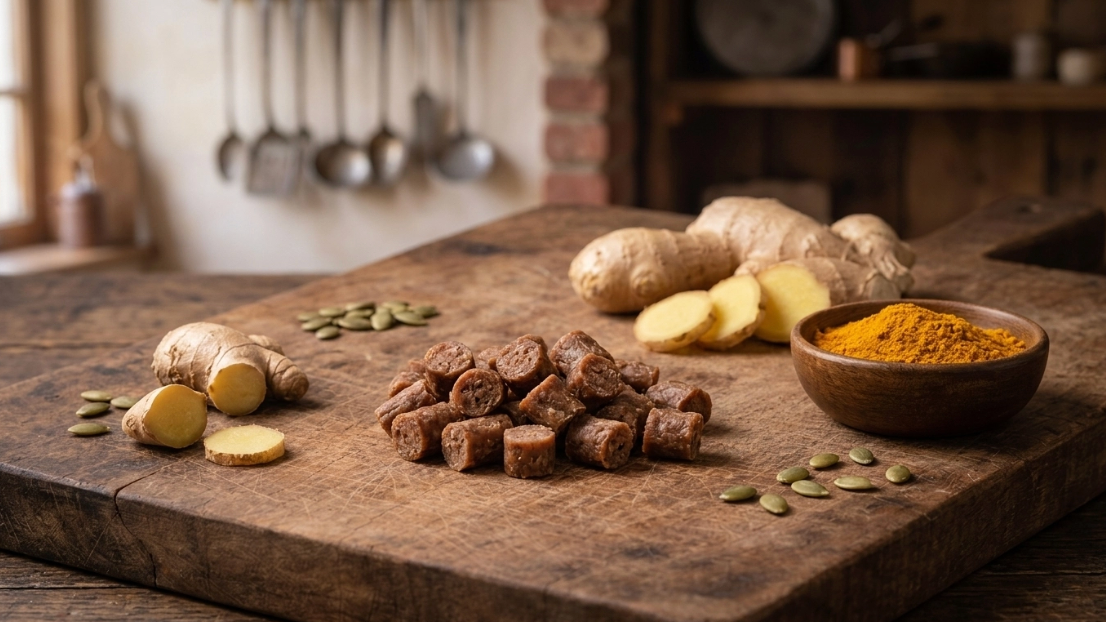
Our treats are sliced into thin cylinders to ensure even drying and easy digestion.

Understanding why air-dried dog treats are different helps in making an informed choice for your pet.
4. Fillers and Preservatives
Fillers are ingredients added to treats to provide bulk without nutritional value.
Common fillers include wheat, corn, soy, and various grain by-products.
Many dogs lack the enzymes necessary to break down these complex carbohydrates efficiently.
This can lead to bloating, gas, and irregular bowel movements.
Glycerin is another common additive used to keep treats soft and chewy.
While often derived from vegetable sources, it is an unnecessary sugar that adds calories without nutrition.
Chemical preservatives such as BHA, BHT, and ethoxyquin are used to extend shelf life in factory settings.
These chemicals have been linked to various health concerns in long-term studies.
Natural preservatives like rosemary extract or tocopherols (Vitamin E) are safer alternatives.
However, the best treats use the air-drying process itself as the primary method of preservation.
Removing moisture naturally prevents the growth of bacteria and mold.
Always check the label for "no artificial preservatives" or "no fillers."
For more detail, read about the truth about preservatives in dog treats.
A clean label is a sign of a manufacturer that prioritizes pet health over profit margins.
5. The 'Butcher' Difference
There is a significant gap between factory-produced treats and those made by butchers.
Factories prioritize volume, speed, and cost-efficiency.
This often leads to the use of automated machinery that requires highly processed, uniform ingredients.
A butcher-crafted approach focuses on the quality of the raw material.
Butchers understand how to select and prepare specific cuts of meat.
Hand-crafting allows for better quality control at every stage of production.
Small-batch preparation ensures that each treat meets a specific standard.
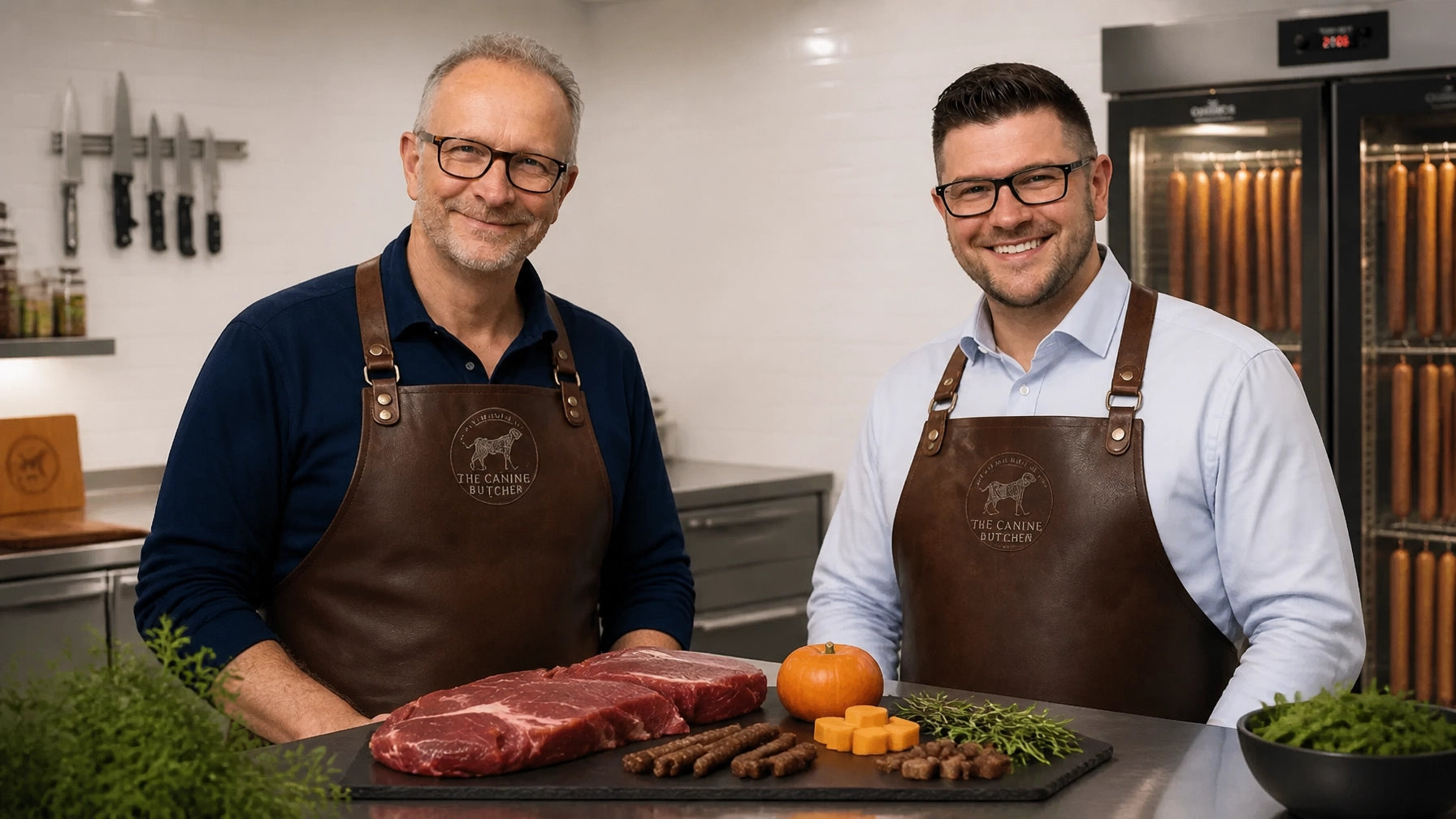
At The Canine Butcher, we apply traditional butchery techniques to create our treats.
We use real cuts of British meat, sliced into thin, digestible portions.
This artisanal method respects the integrity of the ingredient.
It results in a product that is closer to a dog's natural diet.
Choosing a butcher-made treat means supporting traditional craftsmanship and transparent sourcing.

Summary of Quality Indicators
To ensure you are buying a high-quality real meat treat, use this checklist:
Confirm the first ingredient is a specifically named real meat cut.
Verify the ingredient list is short and free of complex chemical names.
Look for "air-dried" as the primary processing method.
Check for the absence of grains, glycerin, and artificial preservatives.
Identify if the product is made in small batches by specialists.
Following these steps will help you navigate the complexities of pet food labeling.
Your dog’s health is directly influenced by the quality of the treats they consume.
Investing in butcher-quality nutrition provides long-term benefits for their gut health and vitality.
For dogs with specific dietary requirements, consider our Sensitive Lamb & Pumpkin Bites.
These are crafted specifically to be gentle on the stomach while providing high-quality protein.

The label is your most important tool as a responsible pet owner.
Read it with precision and choose products that align with natural, butcher-led standards.