Cart
0
Table of Contents
- Why Storing Air Dried Treats Correctly Matters
- What You'll Need Before You Store
- Step 1: Check the Packaging and Seal It Properly
- Step 2: Choose the Best Containers for Natural Dog Treats
- Step 3: Store at the Right Temperature and Humidity
- The Shelf Life of Air Dried Dog Treats
- Signs of Spoiled Dog Treats to Watch For
- Common Mistakes to Avoid
- Frequently Asked Questions
Last Updated: September 21, 2026
Why Storing Air Dried Treats Correctly Matters
Air-dried treats are not shelf-stable forever. Get the storage wrong and you undo the care that went into making them.
This guide from The Canine Butcher explains how to store air dried treats so they stay fresh, safe, and appealing. Below, we cover the exact steps, the containers that work, and the signs that tell you a treat has gone off.
Here is the core tension most owners miss: air-dried meat is a low-moisture product, and moisture is its enemy. A treat that feels firm and dry on the day it arrives can turn soft and stale within days if it sits in a warm, damp spot. The fix is not complicated, but it does need to be consistent.
The Food Standards Agency guidance on food storage and hygiene sets out the same principle for all dried and preserved foods: keep them cool, keep them dry, and keep them sealed.
So how do you store air dried treats properly? You control three things: the seal, the container, and the environment. Get those right and most treats hold their quality for weeks.
What You'll Need Before You Store
Sort your kit before you open a new bag. Having the right items ready stops you from leaving treats exposed.
You will need:
- Airtight containers with a firm lid
- Resealable pouches or clips for the original bag
- A cool, dark cupboard or shelf
- Labels and a pen for dates
- A small scoop or tongs to avoid handling treats directly
One practical note: wash and dry your containers fully before first use. A trace of moisture or old food residue can shorten shelf life fast.
Step 1: Check the Packaging and Seal It Properly
Start by checking the packaging for damage. Any tear, split seam, or loose seal lets air in.
If the bag is intact, keep the treats in it and reseal tightly after each use. Squeeze out excess air before closing. If the bag is damaged, move the treats straight into an airtight container.
- Check the seal for splits or holes
- Press out air before closing
- Use clips or a resealable strip, not a loose fold
- Write the opening date on the bag or container
A common mistake is leaving the bag open between servings. Even ten minutes of exposure in a warm kitchen adds moisture. Close it every time.
Step 2: Choose the Best Containers for Natural Dog Treats
The best containers for natural dog treats are airtight, opaque, and easy to clean. Glass jars with clamp lids and food-grade metal tins both work well.
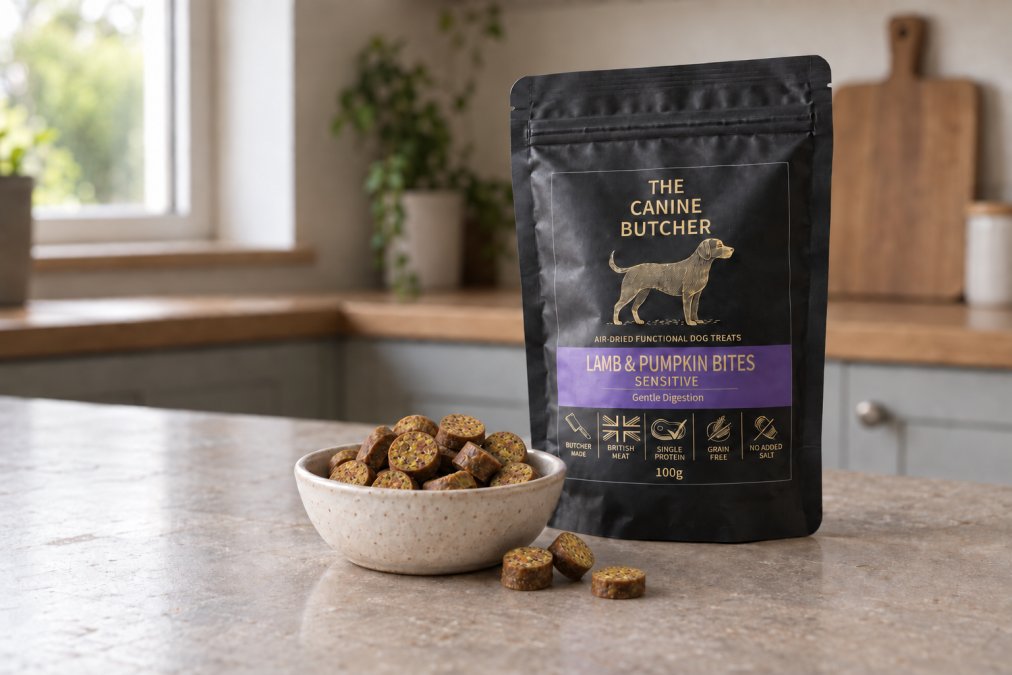
A glass jar with a tight-fitting lid filled with air-dried meat treats sitting on a kitchen counter, next to a resealable pouch and a small bowl of treats, natural daylight
Plastic tubs are fine too, as long as the lid seals firmly. Avoid thin bags or open bowls for anything longer than a day.
Container |
Air Seal |
Best For |
Watch Out For |
|---|---|---|---|
Glass jar with clamp lid |
Strong |
Small batches, daily use |
Heavy; can break |
Metal tin |
Strong |
Medium batches |
Can dent and lose seal |
Plastic tub with gasket |
Good |
Large batches |
Cheaper lids warp over time |
Original resealable bag |
Moderate |
Short-term storage |
Tears easily |
Pick one container per batch. Mixing old and new treats in the same jar makes it harder to track freshness.
Step 3: Store at the Right Temperature and Humidity
Cool and dry beats warm and damp every time. Aim for a steady cupboard away from heat sources.
Keep treats away from:
- Ovens, hobs, and radiators
- Sunny windowsills
- Dishwashers and kettles that release steam
- Damp cellars or garages
Room temperature in a dry cupboard suits most air-dried treats. If your kitchen runs humid, a sealed container matters even more.
Pro TipIf you buy in bulk, split the batch. Keep a small amount in your daily-use jar and seal the rest tightly in a second container stored in the coolest cupboard you have. Every time you open a big bag, you let moisture in.
The Shelf Life of Air Dried Dog Treats
The shelf life of air dried dog treats depends on the meat, the seal, and where you keep them.
As a general guide:
- Sealed and stored cool: several weeks to a few months
- Opened and resealed well: use within a few weeks
- Exposed to air or warmth: days, not weeks
Always check the date on the pack first. That is the maker's guide, and it assumes the packaging stays sealed. Once opened, treat that date as a starting point, not a promise.
If you are unsure, trust your senses over the calendar. More on that below.
Signs of Spoiled Dog Treats to Watch For
Signs of spoiled dog treats show up in how they look, feel, and smell. If any of these appear, throw the treat away.
Watch for:
- A sour, sharp, or musty smell
- Soft, sticky, or slimy texture
- Visible mould, white or green patches
- A colour change from the original
- Wrinkled or damp packaging
Watch OutNever taste-test a treat to check if it is still good. Meat that has turned can carry bacteria that make dogs seriously ill, and the smell test is not reliable enough to gamble on. If in doubt, bin it.
One soft treat in a jar can affect the rest. Remove it and check the whole batch before resealing.
Common Mistakes to Avoid
Most storage failures come down to a handful of repeated errors.
- Leaving the bag open between servings
- Storing treats near heat or steam
- Using a container that does not seal
- Mixing old and new batches together
- Keeping treats past their date
- Handling treats with wet or dirty hands
Fix these and you will rarely lose a batch.
At The Canine Butcher, our air-dried treats are gently dried to lock in flavour and nutrition, with no artificial preservatives. That means good storage is what keeps them at their best. Our single-protein, grain-free recipes use real cuts of meat, so a proper seal protects exactly what you paid for.
Frequently Asked Questions
Do air-dried dog treats need to be refrigerated?
No, air-dried treats do not need refrigeration if they are kept in an airtight container away from heat and moisture. The drying process removes enough water to make them shelf-stable. However, if your kitchen gets very warm or humid, moving them to the fridge can help them last longer. Always check the packaging for specific storage advice from the maker.
How long do air-dried dog treats last once opened?
Once opened, most air-dried treats stay fresh for two to four weeks when stored in an airtight container at room temperature. The shelf life of air dried dog treats depends on the protein, how dry they are, and how well you seal them. Treats stored in a damp or warm spot will spoil faster, so keep them cool and dry.
Can you freeze air-dried dog treats to extend shelf life?
Yes, you can freeze air-dried treats to extend their shelf life, especially if you bought a large batch. Wrap them tightly or put them in a freezer-safe bag, then thaw only what you need. Freezing does not harm the texture much, but repeated thawing and refreezing can introduce moisture, so portion them out before freezing.
How do I know if my dog's treats have gone off?
Look for signs of spoiled dog treats such as a sour or rancid smell, visible mould, a slimy or sticky surface, or a change in colour. If the treats feel damp or have white spots that are not salt or fat, throw them away. When in doubt, bin them. Feeding spoiled treats can upset your dog's stomach.
Storing air dried treats well comes down to three habits: seal them, keep them cool and dry, and check them often. It takes seconds and saves whole batches. The Canine Butcher makes single-protein, grain-free treats with real cuts of meat and no artificial preservatives, gently air-dried to hold their quality. Shop with The Canine Butcher and give your dog treats that stay fresh from the first bite to the last.