Cart
0
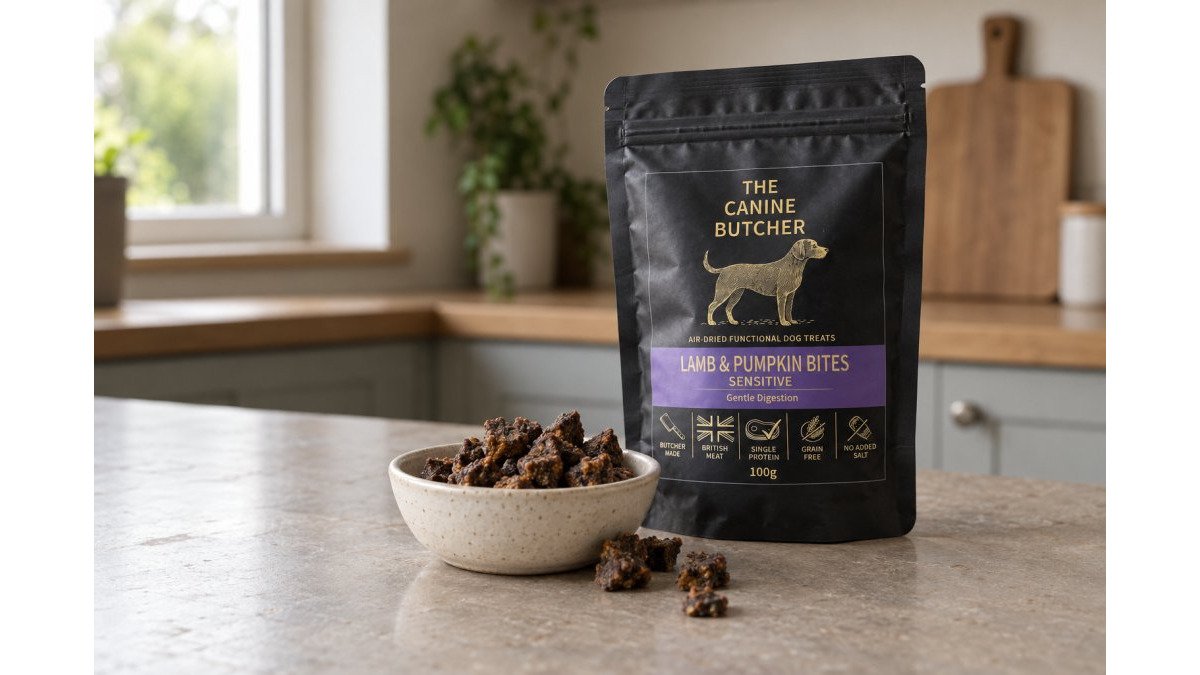
Table of Contents
- What Causes Sensitive Stomachs in Dogs
- How to Choose Single Protein Treats for Your Dog
- Dog Treat Ingredient Labels Explained
- Benefits of Air-Dried Dog Treats for Sensitive Stomachs
- Ingredients to Avoid in Dog Treats for Sensitive Stomachs
- How to Introduce New Treats Safely
- Finding the Right Treat for Your Dog
- Frequently Asked Questions
Last Updated: September 23, 2026
If your dog's stomach seems to react badly to most treats, you're not alone. Many dog owners struggle to find options that won't upset their pet's digestion. The challenge is knowing which treats are actually safe and how to choose dog treats for sensitive stomachs without triggering another digestive issue. At The Canine Butcher, we understand the challenges owners face with sensitive dogs, and the answer comes down to understanding what causes sensitivity in the first place, then using that knowledge to make smarter choices about what you feed.
The good news is that choosing the right treats doesn't have to be complicated. It starts with reading labels properly, understanding which ingredients tend to cause problems, and knowing how to introduce anything new slowly. Let's walk through exactly how to do this.
What Causes Sensitive Stomachs in Dogs
A sensitive stomach in dogs usually stems from a few common culprits. The most frequent triggers are grains, artificial additives, and proteins the dog's body struggles to digest. Some dogs react poorly to multiple protein sources mixed together. Others find that artificial preservatives, colourings, or excessive salt set off digestive upset.
Food intolerances differ from allergies. An intolerance causes digestive symptoms like loose stools or vomiting (the NHS). An allergy involves the immune system and may show up as skin irritation, itching, or ear problems alongside gut issues.
The best approach is to identify which specific ingredients your dog reacts to. This usually means starting with single-protein treats and watching for any changes in digestion or behaviour over several days.
How to Choose Single Protein Treats for Your Dog
Single-protein treats contain meat from only one animal source. This makes them ideal for dogs with sensitive stomachs because you can control exactly what you're feeding. If your dog reacts, you know which protein caused the problem.
When choosing single protein treats, look for these qualities:
- One meat source only (lamb, beef, chicken, or pork)
- No grain fillers or carbohydrate padding
- No artificial preservatives or colourings
- Minimal additional ingredients beyond the meat itself
- Clear labelling that states the exact protein used
Many commercial treats mix multiple proteins to reduce costs. This makes it harder to pinpoint what upsets your dog. Single-protein options give you that clarity.
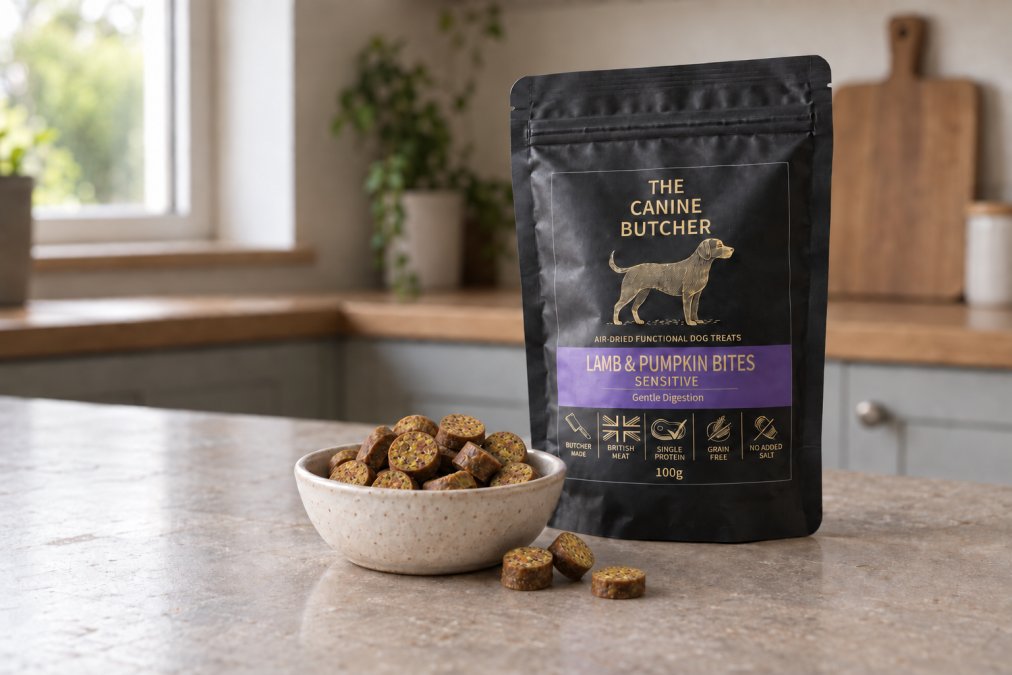
Our Lamb & Pumpkin Bites are made from British lamb with added pumpkin and simple botanicals, designed specifically for dogs with sensitive digestion. They're air-dried to preserve nutrition without needing artificial preservatives.

Dog Treat Ingredient Labels Explained
Reading a treat label properly is crucial. Start at the ingredient list, not the marketing claims on the front.
Meat content matters most. The first ingredient should be meat, not grain or by-products. "Lamb" is better than "lamb meal" or "meat by-products." Whole meat contains more usable nutrition.
Watch for hidden grains. Wheat, corn, and soy are common fillers in cheaper treats. They're cheap to add and often trigger digestive upset. Grain-free treats work better for many sensitive dogs.
Preservatives to avoid:
- BHA and BHT (synthetic antioxidants)
- Ethoxyquin (industrial preservative)
- Sodium nitrite (curing salt)
Natural preservatives like mixed tocopherols (vitamin E) and rosemary extract are gentler options.
Artificial additives. Colours, flavourings, and sweeteners add nothing nutritional. They're there to appeal to owners, not to benefit your dog. Skip them.
By-products and "meal." These are low-grade protein sources. Your dog deserves better.
The simplest rule: if you can't recognise the ingredient or can't pronounce it, question whether it belongs in your dog's treat.
Pro TipFlip the packet over and read the ingredient list before checking anything else. Marketing claims on the front often mislead. The ingredient list tells the truth.
Benefits of Air-Dried Dog Treats for Sensitive Stomachs
Air-drying is a gentler preservation method than most alternatives. It removes moisture slowly without heat, which protects the nutritional value and natural flavours of the meat.
Unlike treats made with synthetic preservatives, air-dried options don't rely on chemical additives to stay fresh. The low moisture content naturally prevents bacterial growth.
This matters for sensitive dogs because:
- No artificial preservatives mean fewer potential irritants
- The slow drying process keeps proteins intact and digestible
- Natural flavour means less need for artificial taste enhancers
- The texture supports natural chewing.
Air-dried treats also tend to be more concentrated in meat content. You're feeding your dog actual nutrition, not filler padded with preservatives.
Ingredients to Avoid in Dog Treats for Sensitive Stomachs
Certain ingredients cause problems more often than others. If your dog has a sensitive stomach, steer clear of these:
Grains. Wheat, corn, barley, and oats are common fillers. Many dogs struggle to digest them properly. Grain-free treats eliminate this issue entirely.
Multiple proteins. Mixing chicken, beef, and pork in one treat makes it impossible to identify which protein causes a reaction. Stick to single-protein options.
High fat content. Excessive fat can trigger loose stools and digestive upset. Look for treats with moderate fat levels.
Lamb & Pumpkin Bites – SENSITIVE →
Artificial sweeteners. Xylitol is toxic to dogs. Even "safe" artificial sweeteners can cause digestive issues in sensitive animals.
Excess salt. Added salt stresses the digestive system and contributes to dehydration. Good treats contain no added salt.
Soy and soya. These are cheap fillers that many sensitive dogs react to poorly.
Rendered fats. These are low-quality, often poorly digested fats. Fresh meat fat is always better.
Cellulose and plant-based fillers. These add bulk without nutrition and can cause gas or loose stools.
The pattern here is simple: whole, recognisable ingredients beat processed fillers every time. If it sounds like something you wouldn't eat, your dog probably shouldn't either.
Watch OutIf your dog shows signs of a reaction, vomiting, diarrhoea, itching, or lethargy, stop the treat immediately and consult your vet. Some sensitivities can develop suddenly, even to foods your dog previously tolerated.
How to Introduce New Treats Safely
Even the best treat can cause problems if introduced too quickly. Your dog's digestive system needs time to adjust to anything new.
Start small. Give just one or two pieces on day one. Watch for any digestive changes over the next 24 hours. If all seems well, you can increase the amount gradually.
Space them out. Introduce new treats over 7-10 days. This gives your dog's gut time to adapt without overwhelming it.
Mix with familiar food. If your dog is particularly sensitive, break the treat into tiny pieces and mix it with food they already eat well. This softens the introduction.
Watch for reactions. Loose stools, vomiting, excessive gas, or itching within 24-48 hours usually signals a problem. Stop immediately if any of these appear.
Keep a diary. Note which treats you've introduced and how your dog responded. This builds a clear picture of what works and what doesn't.
Introduce one at a time. Never introduce multiple new treats at once. You won't know which one caused a problem if a reaction occurs.
Reduce main meals slightly. Treats are extras. If you're adding treats to your dog's daily intake, reduce their regular food slightly to avoid overfeeding.
Most dogs adjust to new treats within a week if the introduction is done slowly. Patience here prevents weeks of digestive trouble later.
Finding the Right Treat for Your Dog
The best treat for a sensitive stomach is one your dog actually enjoys, tolerates well, and that contains ingredients you trust.
Start by identifying which proteins your dog handles best. If you've noticed your dog does well on chicken-based food, try single-protein chicken treats. If beef seems to cause problems, avoid it.
Look for treats made by producers who prioritise transparency. You should be able to find out exactly what's in the treat, where the meat comes from, and how it's made. Vague ingredient lists or unclear sourcing are red flags.
Consider the format too. Some dogs prefer softer treats, others like something to chew on. Bites work well for smaller dogs or frequent training rewards. Sticks suit dogs that enjoy longer chewing sessions.
Our Discovery Pack lets you try four different air-dried recipes, beef, lamb, chicken, and pork, in smaller quantities. This helps you identify which proteins your dog tolerates best without committing to full-size packs.

Key TakeawayThe right treat for a sensitive stomach comes down to three things: single protein, recognisable ingredients, and a slow introduction. Get those three right and you've solved most of the puzzle.
Frequently Asked Questions
What ingredients should I avoid in dog treats for sensitive stomachs?
Avoid artificial preservatives, artificial colours, high-fat content, and common allergens like wheat, soya and corn. Many dogs with sensitive stomachs also struggle with treats containing multiple protein sources or excessive fillers. Single-protein treats with recognisable, simple ingredients are gentler on digestion. Always check the ingredient list for anything you don't recognise, and if your dog has known allergies, steer clear of those proteins entirely. When in doubt, speak to your vet about which ingredients to avoid for your specific dog.
Are single-protein treats better for dogs with digestive issues?
Yes, single-protein treats are often a better choice for dogs with sensitive stomachs. They're simpler for your dog's digestive system to process and make it easier to identify which ingredients might be causing a reaction. If your dog reacts badly to a single-protein treat, you know exactly which protein to avoid going forward. Multi-ingredient treats can mask the culprit, making it harder to pinpoint the problem. Single-protein options also tend to have fewer additives and fillers, which further supports digestive comfort.
How do I know if a treat is causing my dog's stomach upset?
Watch for signs like loose stools, vomiting, excessive gas, or visible discomfort within a few hours of eating a treat. Some dogs may also become itchy or develop skin irritation. If you suspect a treat is the problem, stop giving it and return to what your dog was eating before. If symptoms persist, contact your vet. When introducing any new treat, do it gradually and in small amounts so you can spot any reaction early. Keeping a simple food diary can help you track which treats your dog tolerates well.
What are the benefits of air-dried dog treats for sensitive stomachs?
Air-dried treats are gently processed without high heat, which preserves nutrients and natural flavours whilst keeping the ingredient list short and simple. Because they contain no artificial preservatives or additives, they're easier on sensitive digestion. The slow drying process also makes them naturally shelf-stable, so there's no need for chemical preservatives. Air-dried treats are typically made from whole meat and offal with minimal processing, making them closer to what a dog would eat naturally. This simplicity is exactly what dogs with sensitive stomachs need.