Cart
0
Table of Contents
- Signs of Dog Food Intolerance and Allergies
- Food Allergies vs. Environmental Allergies
- How to Choose Single Protein Treats for Sensitive Dogs
- Dog Elimination Diet Guide: Finding the Trigger
- When to Consult a Veterinary Professional
- Managing Your Dog's Diet After Identifying Allergies
- Frequently Asked Questions
Last Updated: 25 September 2026
Signs of Dog Food Intolerance and Allergies
When your dog reacts badly to certain foods, it's not always obvious what's causing the problem. Dog food allergies can show up in many different ways, and spotting them early makes a real difference to your dog's comfort and health.
The signs often start small. Your dog might scratch more than usual, or you notice their digestion isn't quite right. These early signals are your cue to pay attention. Catching a food allergy before it becomes a bigger problem is always easier than managing a severe reaction.
Digestive symptoms
Digestive issues are one of the most common signs that something in your dog's diet isn't working. You might notice loose stools, constipation, or your dog vomiting after meals. Some dogs get bloated or pass gas more often than usual.
These symptoms can come and go. Your dog might be fine for a few days, then have trouble again. That pattern often points to a specific ingredient rather than a one-off upset.
Watch for:
- Loose stools or diarrhoea
- Constipation lasting more than a day or two
- Vomiting shortly after eating
- Excessive wind or bloating
- Loss of appetite or sudden pickiness
If your dog shows any of these signs regularly, it's worth keeping a food diary. Write down what they ate and when symptoms appeared. That information becomes really useful when you're trying to narrow down the culprit.
Skin and coat changes
Your dog's skin is often the first place food allergies show up visibly. You might see redness, flaking, or a dull coat where there used to be shine. Some dogs develop itchy patches or their skin feels greasy even after a bath.
Scratching and licking are the giveaways. If your dog is chewing at their paws constantly or scratching behind their ears more than usual, food could be the reason. Ear infections are surprisingly common with food sensitivities too.
Common skin signs include:
- Red or inflamed patches
- Excessive scratching or licking
- Flaky, dry skin
- Greasy coat despite regular bathing
- Recurring ear infections
- Paw chewing or licking
The tricky part is that environmental allergies can look identical. Pollen, dust, and mould cause similar scratching. That's why working through other possibilities matters. If the scratching happens year-round rather than seasonally, food is more likely to blame.
Behavioural and physical signs
Sometimes the signs are subtler. Your dog might seem restless, uncomfortable, or just not themselves. They could have less energy than normal, or become grumpy when they'd normally be playful.
Weight changes can happen too. Some dogs lose weight when they're struggling to digest their food properly. Others might gain weight because they're eating more to compensate for poor nutrient absorption.
Watch for these changes:
- Lethargy or unusual tiredness
- Restlessness or difficulty settling
- Mood changes or irritability
- Unexplained weight loss or gain
- Excessive drinking or urination
- General discomfort or whining
These signs matter because they suggest your dog isn't feeling their best. That's your signal to look more carefully at what they're eating.
Food Allergies vs. Environmental Allergies
The difference between a food allergy and an environmental one matters because the solutions are completely different. Understanding which one your dog has is the key to actually fixing the problem.
Food allergies are reactions to specific ingredients in what your dog eats. They happen consistently whenever your dog has that ingredient. Environmental allergies come from things your dog breathes in or touches, pollen, dust, mould, or grass. These typically get worse at certain times of year.
Here's the practical difference: if your dog scratches mainly in spring and summer but is fine in winter, it's probably environmental. If they scratch all year round, food is the more likely culprit.
Food allergies also tend to affect digestion alongside skin symptoms. Your dog might have itching and loose stools. Environmental allergies usually just cause itching and respiratory symptoms like sneezing or a runny nose.
The timing gives you another clue. Food reactions happen within hours or days of eating the problem ingredient. Environmental reactions build up over days or weeks as your dog is exposed to pollen or other triggers.
If you're unsure, keep notes on when symptoms appear and what the weather was like. That pattern helps you and your vet work out which type you're dealing with.
How to Choose Single Protein Treats for Sensitive Dogs
Once you suspect a food allergy, switching to simple, single-protein treats is one of the best moves you can make. Single-protein treats contain just one meat source, which makes it much easier to spot exactly what your dog is reacting to.
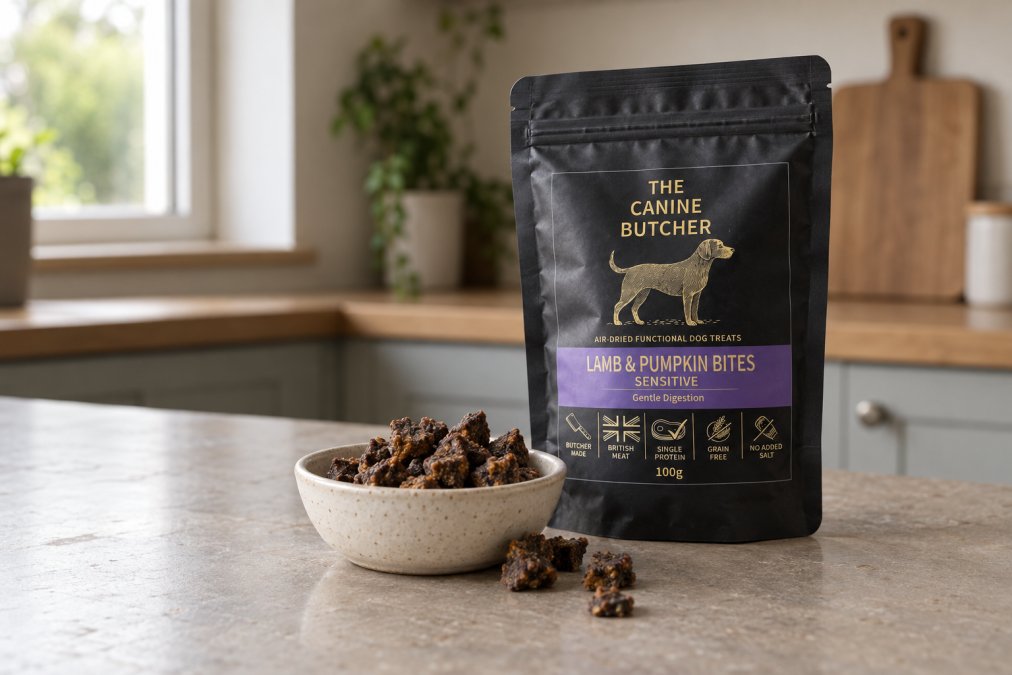
Lamb & Pumpkin Bites – SENSITIVE →
The logic is straightforward: fewer ingredients mean fewer things that could cause a problem. If your dog eats a treat with chicken, beef, and pork all mixed together and has a reaction, you won't know which one caused it. With a single-protein treat, the answer is clear.
Look for treats that list real meat as the first ingredient. Air-dried treats like those from The Canine Butcher preserve the meat's natural goodness without needing fillers or artificial preservatives.
When choosing single-protein treats:
- Pick one protein and stick with it for at least 2-3 weeks
- Check the ingredient list carefully, no hidden proteins or fillers
- Avoid treats with added salt, colours, or artificial preservatives
- Consider the format: bites are good for training or smaller dogs, sticks work better for larger dogs or enrichment
- Start with small amounts to see how your dog responds
Our Lamb & Pumpkin treats are designed specifically for sensitive dogs. The single lamb protein is easy to digest, and the pumpkin naturally supports everyday digestion. They're available in both bites and sticks, so you can choose what works best for your dog's size and how you like to reward them.

Dog Elimination Diet Guide: Finding the Trigger
An elimination diet is the most reliable way to figure out exactly which ingredient your dog is reacting to. It takes patience, but it works. The idea is simple: remove all the suspect ingredients, then add them back one at a time to see which one causes a reaction.
What to remove and when
Start by removing all treats, table scraps, and anything other than their main meals. Then switch their main food to something they've never eaten before. Many vets recommend novel proteins, meats your dog hasn't had, like lamb, duck, or venison.
This clean slate period usually lasts 4-6 weeks. During this time, your dog eats only their new food and water. Nothing else. That includes treats, chews, and flavoured medications. It sounds strict, but it's the only way to get a clear picture.
After 4-6 weeks, if your dog's symptoms have improved significantly, you know food was the problem. Now comes the detective work: adding ingredients back one at a time to find the culprit.
Start by reintroducing one ingredient you suspect might be the problem. Give it for a full week, watching carefully for any symptoms. If nothing happens, that ingredient is probably fine. If symptoms return, you've found your trigger.
Keep detailed notes:
- Date you introduce each new ingredient
- Exact ingredient and amount
- Any symptoms that appear
- How long symptoms take to show up
- How severe they are
This record becomes invaluable. It shows you exactly which proteins and ingredients your dog tolerates and which ones to avoid.
How long the process takes
The full elimination diet typically takes 8-12 weeks. That's 4-6 weeks of the clean phase, then another 4-6 weeks of reintroducing ingredients one at a time.
It's not quick, but it's thorough. You'll know with confidence what your dog can eat and what to avoid. That knowledge saves you from months of guessing and your dog from ongoing discomfort.
Some owners find they can speed things up slightly by testing multiple ingredients if symptoms don't return.
When to Consult a Veterinary Professional
While you can do a lot of detective work at home, there are times when professional guidance makes a real difference. Your vet can rule out other causes that might look like food allergies but aren't.
Contact your vet if:
- Symptoms are severe or getting worse
- Your dog shows signs of distress or pain
- Digestive symptoms last more than a few days
- Skin problems aren't improving after dietary changes
- Your dog has a history of serious health issues
- You're unsure whether symptoms are food-related or something else
- Your dog stops eating or shows unusual behaviour
Managing Your Dog's Diet After Identifying Allergies
Once you know what your dog can and can't eat, the real work is staying consistent. It's tempting to slip back into old habits, but even small amounts of a trigger ingredient can cause problems.
Frequently Asked Questions
What are the most common signs of dog food allergies?
The most common signs include itchy skin, ear infections, digestive upset such as loose stools or vomiting, and excessive scratching or licking. Some dogs develop red, inflamed patches on their skin or experience hair loss. Others show behavioural changes like restlessness or increased scratching at night. If your dog shows any of these signs after eating, it's worth investigating their diet with your vet.
How can I tell if my dog has a food allergy or an environmental allergy?
Food allergies typically cause symptoms year-round, whilst environmental allergies are often seasonal. Food allergies usually affect the skin and digestive system, whereas environmental allergies often cause respiratory symptoms or seasonal flare-ups. The key difference is consistency: if your dog itches and has digestive issues regardless of the season, food is likely the culprit. Your vet can help you distinguish between the two.
What should I look for when choosing treats for a sensitive dog?
Choose single-protein treats with recognisable, simple ingredients and no artificial additives. Avoid treats with multiple proteins, fillers, grains, or added salt and preservatives. Single-protein options like our Lamb & Pumpkin treats make it easier to identify which ingredients your dog tolerates. Always introduce new treats gradually and watch for any digestive or skin reactions over the following days.
How long does an elimination diet take to show results?
Most dogs show improvement within 4 to 6 weeks of removing the trigger ingredient, though some take up to 12 weeks. Skin symptoms typically improve more slowly than digestive symptoms. Once you've identified the problem ingredient, you can reintroduce other foods one at a time to confirm which ones are safe. Keep a food diary throughout the process to track which foods cause reactions.