Cart
0
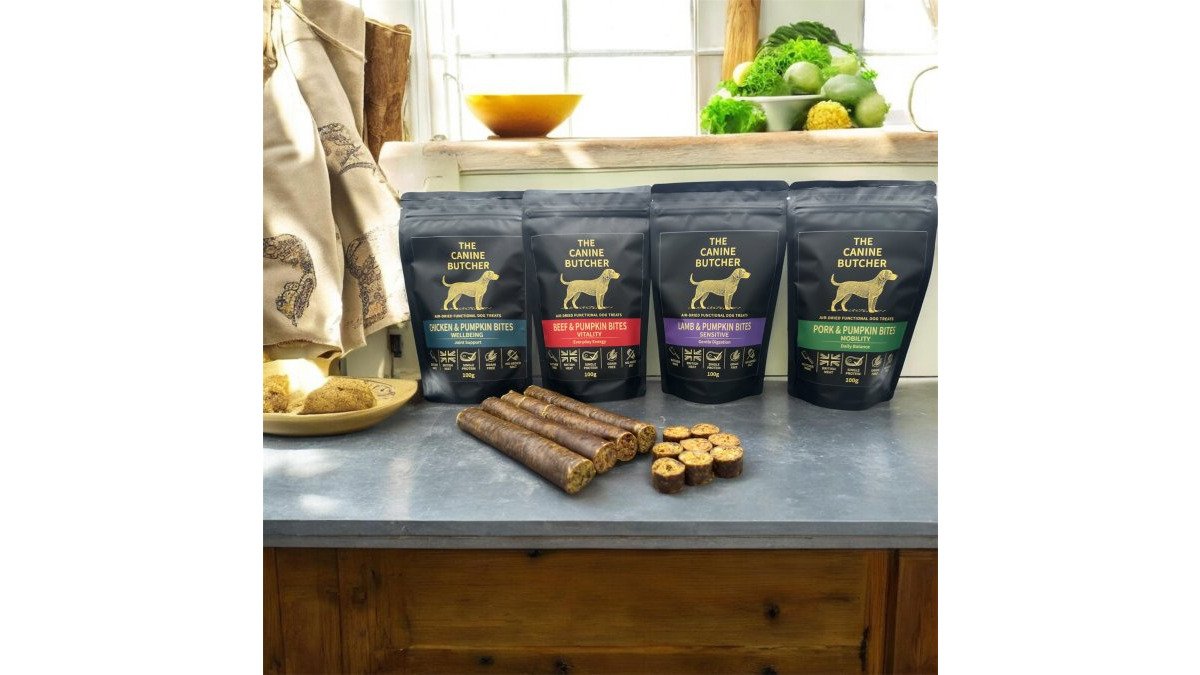
Table of Contents
- What Are Single Protein Dog Treats?
- Why Single Protein Treats Work for Dogs with Allergies
- How to Choose Single Protein Treats for Your Dog
- Novel Protein Dog Treats: A Different Approach
- Single Protein Options: Lamb, Beef, and Pork
- What to Look for in Quality Single Protein Treats
- Introducing Single Protein Treats to Your Dog
- Frequently Asked Questions
Last Updated: October 4, 2026
What Are Single Protein Dog Treats?
Single protein dog treats are complementary snacks made from one primary meat source, with minimal additional ingredients. Unlike multi-protein blends, they contain just one type of meat, making them straightforward and easy to identify.
At The Canine Butcher, we craft single protein treats by selecting premium cuts of British meat and air-drying them gently to preserve flavour and nutrition. The simplicity is deliberate. When your dog's digestive system reacts to something in their diet, a single protein treat helps you isolate exactly what that might be. There's no guesswork, no hidden ingredients, no filler masking potential triggers.
These treats work differently from kibble or wet food. They're complementary, meant to be fed as part of a balanced diet, not as a complete meal replacement. That distinction matters, especially for dogs with sensitivities.
Why Single Protein Treats Work for Dogs with Allergies
Dogs with food allergies or sensitivities often struggle because their immune system reacts to specific proteins or additives. The reaction might show up as itching or digestive upset. Finding the culprit requires elimination, removing suspected ingredients and reintroducing them one at a time.
Single protein treats make this process manageable. If your dog tolerates beef but struggles with chicken, a beef-only treat removes the variable. You're not wondering whether the reaction came from the meat, the grain filler, the synthetic preservative, or something else entirely.
Many dogs with sensitive digestion respond well to single protein options because there's less for their system to process. The simpler the ingredient list, the fewer potential triggers. This is why we focus on quality meat, recognisable botanicals like pumpkin and ginger, and nothing synthetic.
If your dog has been diagnosed with a specific food allergy or shows unusual symptoms after eating, consult your veterinary professional before making dietary changes. They can help you identify which proteins to avoid.
How to Choose Single Protein Treats for Your Dog
Start by identifying which proteins your dog tolerates well. If your dog has already eaten beef without reaction, beef treats are a safe choice. If chicken causes problems, avoid it. If you're unsure which proteins trigger sensitivity, work with your vet to narrow down the options through elimination.
Consider your dog's size and chewing style. Larger dogs often prefer substantial sticks they can gnaw on. Smaller dogs or those with less powerful jaws do better with bite-sized pieces. At The Canine Butcher, we offer both formats, bites for training and smaller portions, sticks for longer-lasting enrichment.
Look at what's actually in the treat. Recognisable ingredients matter. If the label lists "meat by-products" or vague terms, you don't know what your dog is eating. We use real cuts of meat, trim, heart, and liver, plus simple botanicals. No fillers, no added salt, no synthetic preservatives.
Ingredient transparency is essential when managing sensitivities. You need to know exactly what's in every treat so you can spot patterns if a reaction occurs.
| Consideration | What to Look For | Why It Matters |
|---|---|---|
| Protein source | Single, named meat (lamb, beef, pork) | Easier to identify triggers |
| Format | Bites or sticks, matching your dog's size | Prevents choking, suits chewing style |
| Ingredients | Real meat, recognisable botanicals, no fillers | Reduces potential irritants |
| Additives | No added salt, no synthetic preservatives | Protects sensitive digestion |
| Transparency | Full ingredient list, clear sourcing | Builds confidence in what you're feeding |
Novel Protein Dog Treats: A Different Approach
Novel proteins are meats your dog hasn't eaten before, duck, venison, or kangaroo, for example. The theory is straightforward: if your dog reacts to common proteins like beef and chicken, introducing something entirely new might bypass the allergy.
Novel proteins work well for some dogs, particularly those with multiple sensitivities. They're worth considering if your dog has struggled with standard options. The challenge is availability. Many retailers stock only the common proteins, making novel options harder to find and often more expensive.
Single protein treats and novel proteins aren't mutually exclusive. A single protein duck treat is still a single protein treat, it's just less common. If your dog tolerates a novel protein well, sticking with it as your primary treat makes sense.
Single Protein Options: Lamb, Beef, and Pork
Lamb for Sensitive Digestion
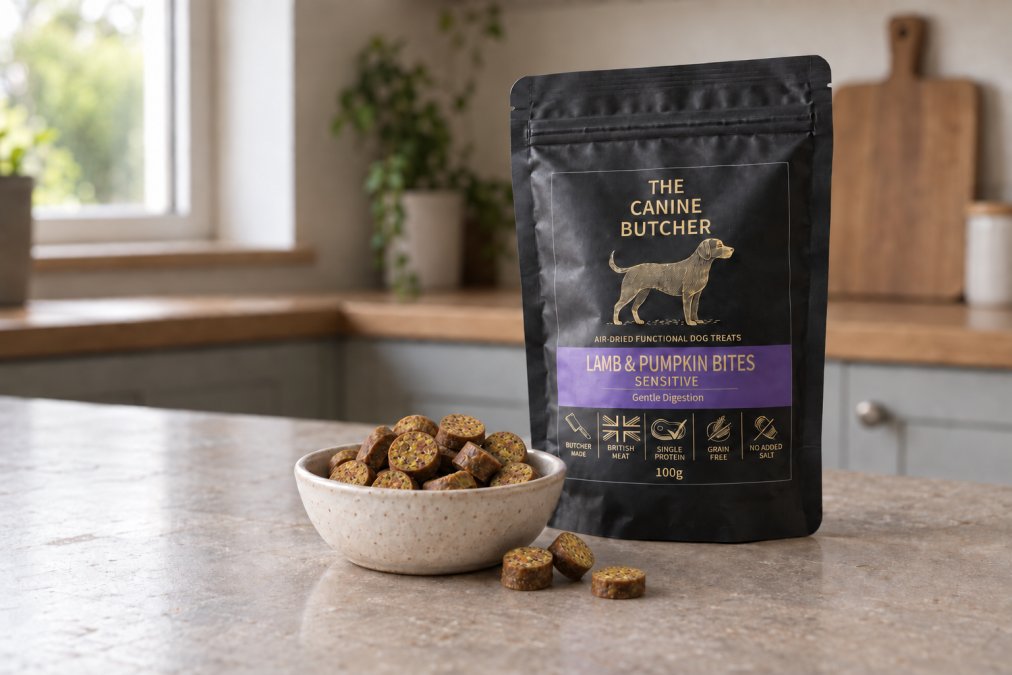
Lamb is often the first choice for dogs with sensitive stomachs. It's a lean protein that many dogs find easier to digest than beef. Our Lamb & Pumpkin treats pair the meat with pumpkin and botanicals like ginger, turmeric, chamomile, and fennel, ingredients chosen to support everyday digestion naturally.

The lamb comes from British sources, gently air-dried to develop rich flavour without synthetic preservation. We include nutrient-rich offal, heart and liver, which adds iron and B vitamins. The result is a treat that's simple, honest, and designed with sensitive dogs in mind.
Lamb works particularly well for dogs showing signs of digestive upset or itching linked to food sensitivity. If your dog has tolerated lamb in the past without reaction, it's a reliable choice for ongoing treats.
Beef for Everyday Vitality
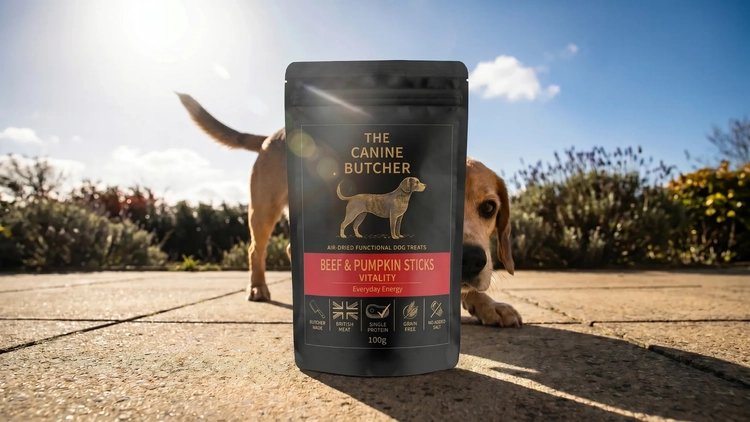
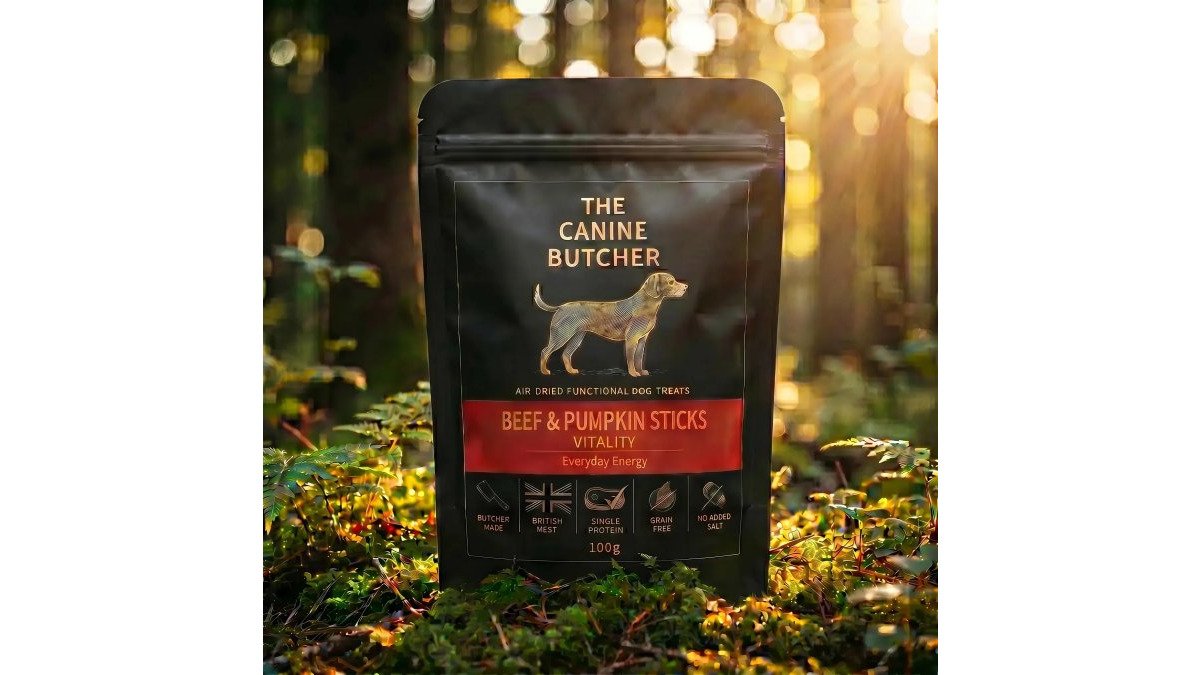
Beef is nutrient-dense and palatable, most dogs find it genuinely appetising. Our Beef & Pumpkin treats use British beef with heart and liver, plus botanicals like ginger, turmeric, spirulina, and rosehip. These ingredients are selected to support everyday vitality and nourishment, not to treat or prevent disease.
Beef suits active dogs and those without known beef sensitivity. The nutrient profile is rich, making it satisfying for dogs who need substantial rewards or enrichment. Air-dried slowly, it develops natural flavour without added salt or preservatives.
If your dog has eaten beef-based food without problems, beef treats fit naturally into their diet. They're straightforward, honest, and built to support wellbeing through quality nutrition.
Lamb & Pumpkin Bites – SENSITIVE →
Pork for Mobility Support
Pork is often overlooked, but it's a lean, digestible protein that many dogs tolerate well. Our Pork & Pumpkin treats combine British pork with heart and liver, plus botanicals including ginger, turmeric, rosehip, and black pepper. These are selected with movement and everyday mobility in mind.
Pork works well for dogs that need lighter protein or those showing sensitivity to beef or lamb. The botanical blend supports natural everyday movement, important for active dogs or those getting older.
Like our other single protein options, pork treats are air-dried gently and contain no synthetic preservatives. They're simple, recognisable, and designed to fit into a balanced diet.
What to Look for in Quality Single Protein Treats
Real meat should be the first and primary ingredient. Not "meat meal" or "by-products", actual meat you'd recognise. We list lamb trim, lamb heart, and lamb liver because that's what's in the treat. Transparency builds trust.
Avoid treats with added salt, artificial colours, or synthetic preservatives. Your dog doesn't need them, and they add unnecessary risk for sensitive digestion. Natural preservation through air-drying is more reliable and honest.
Recognisable botanicals matter. Ginger, turmeric, pumpkin, and chamomile are ingredients you understand. They're not mystery compounds, they're things people eat too. If a treat lists unpronounceable additives, that's a red flag.
Consider sourcing. We work with meat we know because we're butchers, we understand quality and provenance.
Grain-free matters for many dogs with sensitivities, though not all. If your dog reacts to grain, a grain-free treat is essential. If grain isn't a trigger, it's less critical, but many dogs with sensitive digestion do better without it.
Introducing Single Protein Treats to Your Dog
Start small. Give your dog a single treat and observe for 24 hours. Watch for itching, digestive upset, or any change in behaviour. If nothing unusual happens, the protein is likely safe.
Introduce one new protein at a time, spacing introductions by several days. This way, if a reaction occurs, you know exactly which protein caused it. Rushing multiple new proteins simultaneously defeats the purpose of single protein treats.
Feed treats as part of a balanced diet, not as a meal replacement. They're complementary, designed to reward, enrich, or support training, not to provide complete nutrition.
If your dog shows a reaction, itching, vomiting, diarrhoea, or unusual behaviour, stop the treat immediately and consult your vet.
Store treats in a cool, dry place. Air-dried treats are naturally stable without refrigeration, but they benefit from protection from moisture and direct sunlight. Once opened, use within the timeframe suggested on the packaging.
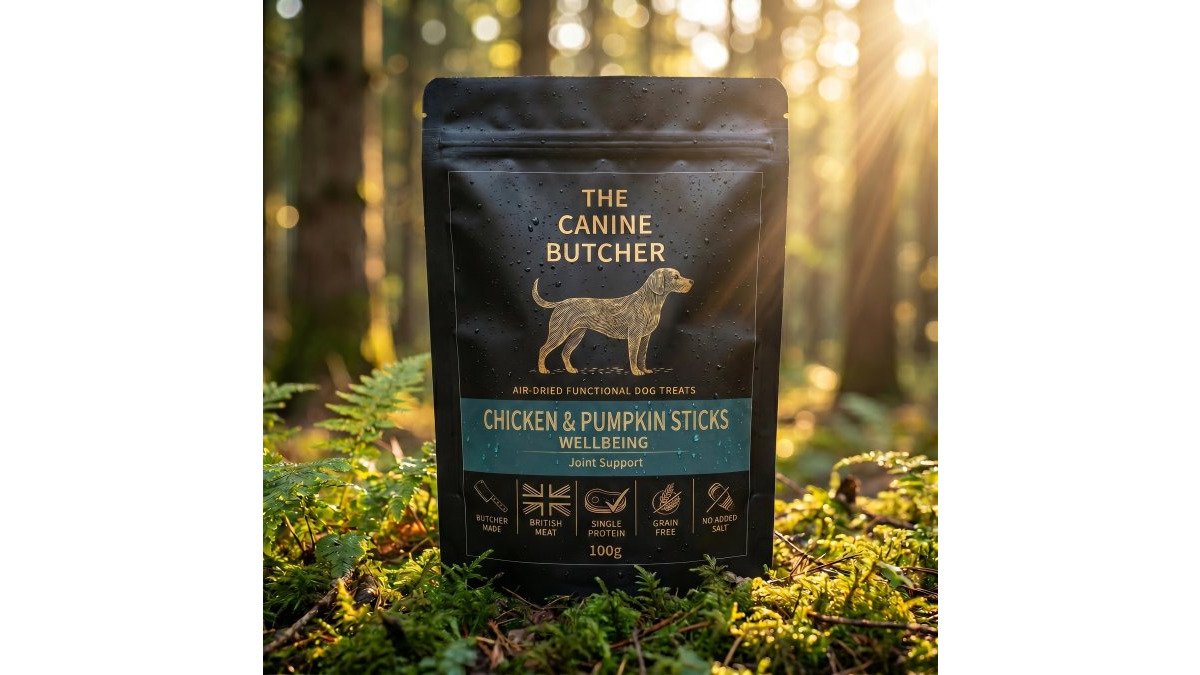
Choosing the right single protein treat for your dog's sensitivities is about matching quality, simplicity, and your dog's individual needs. The Canine Butcher's air-dried single protein treats, whether Lamb & Pumpkin Bites for sensitive digestion, Beef & Pumpkin Bites for everyday vitality, or Pork & Pumpkin Bites for mobility support, are crafted with British meat, recognisable ingredients, and no fillers or synthetic preservatives. Each treat is designed to be straightforward, honest, and genuinely useful for dogs that need simplicity in their diet. Explore our range and find the single protein treat that works best for your dog.


Frequently Asked Questions
What are single protein dog treats?
Single protein dog treats contain one source of meat protein, lamb, beef, or pork, without mixing multiple proteins. This simplicity makes them ideal for identifying which proteins your dog tolerates well. They're often made with minimal additional ingredients, focusing on high-quality meat, offal, and functional botanicals rather than fillers or grains.
Why are single protein treats recommended for dogs with food sensitivities?
Dogs with food sensitivities react to specific proteins or ingredients. Single protein treats eliminate guesswork by removing multiple protein sources, making it easier to spot which ingredients cause problems. If your dog reacts, you'll know it's that specific protein rather than a combination of factors. This clarity helps you and your vet identify safe options for your dog's diet.
How do I know which single protein to choose for my dog?
Start with what your dog has tolerated well in the past, or work with your vet to identify suspected triggers. If your dog has never shown issues, lamb is often a gentler starting point for sensitive dogs. Keep notes on how your dog responds to each protein over a week or two, watch for digestive changes, itching, or ear problems. Introduce one new protein at a time to isolate any reactions clearly.
What is a novel protein in dog treats?
A novel protein is one your dog has never eaten before, used when your dog reacts to common proteins like chicken or beef. Novel proteins are sometimes less processed and come from less common meat sources. Single protein treats can be novel proteins if they're a new option for your dog, but the key difference is the novelty, it's about introducing something your dog's system hasn't encountered before.
Are air-dried single protein treats better for dogs with allergies?
Air-drying preserves the meat's natural nutrients and flavour without needing artificial preservatives, salt, or processing chemicals that might trigger sensitivities. The gentle drying process keeps ingredients recognisable and simple, which helps you understand exactly what your dog is eating. This transparency is especially valuable when managing allergies, as you can be confident there are no hidden additives or fillers.
How should I introduce single protein treats to a dog with allergies?
Introduce new treats slowly over 7-10 days, starting with a small amount alongside your dog's normal food. Watch closely for any signs of digestive upset, itching, or behavioural changes. If your dog tolerates the treat well, you can increase the portion gradually. If you notice any reaction, stop immediately and consult your vet. This measured approach helps you identify safe options without overwhelming your dog's system.